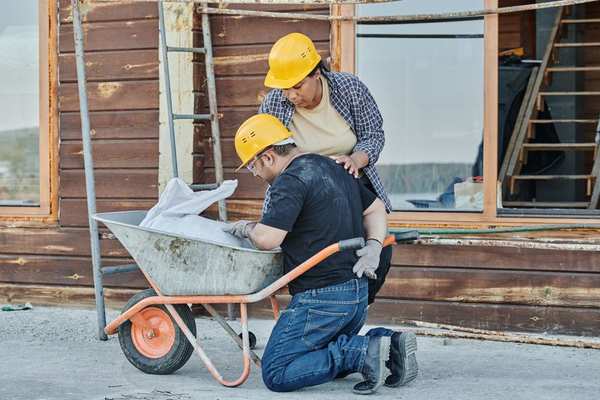

A serious construction injury can create two problems at once: a medical emergency and a legal maze. Workers may assume the only option is workers’ compensation, while a general contractor, property owner, equipment manufacturer, subcontractor, or another company may also be involved. A construction site injury lawyer can help identify which claims may exist, preserve evidence, and evaluate whether a settlement reflects the full effect of the injury rather than only the first round of bills.
For most private-sector workers, workers’ compensation is handled under state law, so benefits, deadlines, and lawsuit rules vary by state. In a severe accident, legal review often focuses on who controlled the work, who created the hazard, and whether a third-party claim can exist alongside workers’ compensation.
When Hiring a Construction Site Injury Lawyer Makes Sense
Early legal help becomes more important when the harm is severe, the facts are disputed, or several companies were working at the site. Construction projects are often multi-employer workplaces, and OSHA recognizes that more than one employer may have safety responsibilities depending on who created, controlled, corrected, or was exposed to a hazard.
Consider speaking with a lawyer promptly after a fall from height, electrocution, crane incident, trench collapse, structural failure, amputation, traumatic brain injury, spinal injury, serious burn, permanent impairment, or fatality. Legal review is also useful when an insurer disputes the injury, questions whether you were an employee, or offers a settlement before your long-term medical outlook is clear.
Multiple Contractors Can Change the Case
A worker may receive workers’ compensation while also having a potential claim against a separate negligent company, depending on state law and the facts. Imagine an electrician employed by a subcontractor falls through an unguarded floor opening created during another contractor’s work. Workers’ compensation may apply, but an investigation may also examine the contractor that created the opening and any entity responsible for correcting the hazard.
This is why a construction accident claim should be reviewed before evidence disappears.
What a Lawyer Investigates After a Job Site Accident
The strongest cases usually begin with evidence, not assumptions. A lawyer may review incident reports, photographs, video, witness statements, safety meeting records, contracts, equipment maintenance records, training materials, inspection documents, and medical records. The goal is to reconstruct what happened and identify which parties had relevant duties or control.
OSHA rules can matter, but an OSHA citation does not automatically determine civil liability or guarantee compensation. An OSHA violation injury may support part of the factual investigation, while the legal effect depends on the jurisdiction and claim. OSHA itself does not award personal-injury damages.
Falls and Scaffolding Accidents Require Fast Evidence Preservation
Falls remain a major construction hazard. OSHA reports that falls to a lower level accounted for 389 of 1,034 construction fatalities in 2024. After a fall, conditions can change quickly: guardrails may be installed, scaffolding reconfigured, equipment removed, and crews reassigned.
In a potential scaffolding accident lawsuit, useful evidence can include photographs of the scaffold, access points, planking, guardrails, tie-ins, fall-protection systems, inspection records, and the names of companies that erected, maintained, or controlled it. If you are physically able, preserve witness names and the exact location of the incident.
Workers’ Compensation and Third-Party Claims Are Different
Workers’ compensation generally provides benefits for job-related injuries without requiring proof of ordinary negligence, but coverage and benefit rules come from state law for most private employees. Common benefits can include medical treatment and partial wage replacement, with additional disability or death benefits depending on the applicable program.
A third-party personal-injury claim is different. It may involve a person or company other than the injured worker’s employer and generally requires proof of legal responsibility. Potential defendants can include equipment manufacturers, property owners, general contractors, subcontractors, or vehicle drivers, but liability is never automatic simply because they were present at the project.
Workers’ compensation insurers may have reimbursement or lien rights against a third-party recovery under state law. A lawyer reviewing both paths can account for those issues before settlement. Related reading: workplace injury claims, workers’ compensation benefits, and third-party liability at work.
How Compensation Is Evaluated
There is no reliable online calculator that can predict the value of a serious construction injury. Compensation depends on the claim type, state law, available insurance, liability evidence, medical prognosis, work restrictions, earnings history, and permanent limitations.
In a third-party case, damages may include past and future medical costs, lost income, reduced future earning capacity, pain and suffering, and other losses allowed by state law. Workers’ compensation uses a different benefit structure and generally does not function like a personal-injury damages award.
A severe injury should not be valued only by adding current bills. A 32-year-old ironworker with a permanent lifting restriction may face years of reduced earning capacity. Future surgery, rehabilitation, assistive equipment, and vocational limitations can materially affect a claim.
What to Do Before You Speak With a Lawyer
Get medical care and follow treatment instructions. Report the injury through the required workplace procedure. Preserve photographs, damaged personal equipment, and documents. Write down what you remember while events are fresh, including who gave instructions, where you were positioned, and which companies were working nearby.
Avoid guessing about fault in recorded statements or posting detailed accident commentary on social media. If an insurer asks for broad medical authorizations or a quick settlement, understand what you are signing first. Deadlines for workers’ compensation notices, personal-injury lawsuits, wrongful-death actions, and government-related claims differ, so state-specific advice matters.
Workers also have federal protection against retaliation for reporting work-related injuries and illnesses. Separate and sometimes short deadlines may apply to retaliation complaints.
FAQ
Do I need a lawyer if I am already receiving workers’ compensation?
Not always. Legal advice may be useful if the injury is serious, benefits are disputed, you may have permanent limitations, or another company may be legally responsible. A lawyer can review whether a third-party claim may exist in addition to workers’ compensation.
Can I sue my employer after a construction accident?
Workers’ compensation laws often limit ordinary personal-injury lawsuits against an employer, but rules and exceptions vary by state. Claims against separate third parties may still be possible. An attorney licensed in the relevant state can evaluate the relationships involved.
Does an OSHA violation prove my case?
No. An OSHA violation can be important evidence, but it does not automatically establish civil liability or damages. The effect of safety regulations, citations, and inspection findings depends on the facts and state law.
How soon should I contact a construction site injury lawyer?
For a severe injury, fatal accident, disputed claim, or incident involving multiple contractors, prompt contact can help preserve evidence and identify deadlines. Waiting can make it harder to locate witnesses or inspect the site in its original condition.
Getting the Right Legal Review
The key question after a serious construction accident is not simply whether someone was hurt at work. It is which legal system applies, which companies may have responsibility for the dangerous condition, and what losses must be addressed over the worker’s recovery. A construction site injury lawyer can investigate those issues, coordinate overlapping claims, and explain options under the law of the state where the injury occurred.