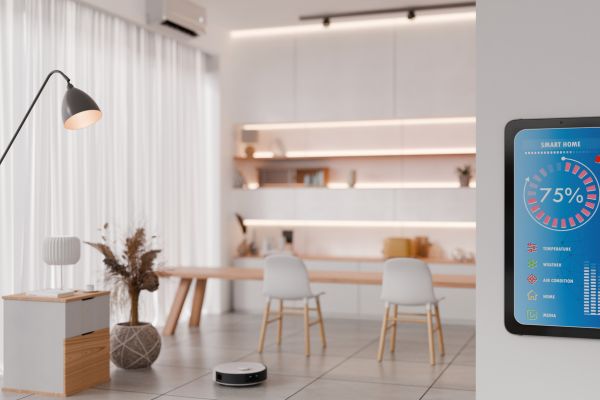

Modern homes are filled with things designed to make life easier, yet many households still feel cluttered, rushed, and strangely difficult to manage. Kitchen counters disappear beneath unopened mail, charging cables gather in tangled piles, and closets become crowded with items people barely remember owning. Even well-designed homes can begin to feel chaotic when daily routines outgrow the systems meant to support them.
That tension explains why interest in smart home organization systems has grown so rapidly in recent years. People are searching for ways to create spaces that function more smoothly without turning their homes into sterile, over-optimized environments. The appeal is not just about tidiness. It is about reducing friction in everyday life.
A thoughtfully organized home changes how mornings feel, how families move through shared spaces, and even how people mentally unwind at the end of a long day. Smart organization is less about perfection and more about creating systems that quietly support the rhythm of living.
Why Traditional Organization Methods Often Fail
Many people approach organization with bursts of motivation. They spend an entire weekend sorting closets, labeling containers, or rearranging shelves, only to watch the clutter slowly return within weeks.
The problem is usually not laziness. It is that organization systems often ignore human behavior.
A perfectly arranged shelf means very little if the system is inconvenient to maintain during real daily routines. People naturally place items where it feels easiest in the moment, especially when tired, distracted, or rushing between responsibilities. Over time, homes drift toward convenience rather than structure.
Smart home organization systems work differently because they are designed around actual habits instead of idealized ones. Rather than forcing rigid routines, they aim to reduce resistance and make organization feel almost automatic.
That subtle distinction matters more than most people initially realize.
The Rise of Smart Home Thinking
The word “smart” often brings to mind digital assistants, connected appliances, or voice-controlled lighting. While technology certainly plays a role, smart home organization is broader than automation alone.
In many cases, smart organization simply means designing spaces more intentionally. It involves understanding how people move through a home, where clutter tends to collect, and what small adjustments can improve daily flow.
Technology does contribute significantly, though. Smart inventory systems, app-connected storage tracking, automated reminders, and intelligent lighting all help households manage spaces more efficiently. Yet the best systems rarely feel intrusive or overly technical.
Instead, they quietly blend into the background while making everyday tasks feel easier and more manageable.
Entryways as the Foundation of Household Organization
One of the most overlooked areas in home organization is the entryway. Yet it often determines whether clutter spreads throughout the house or remains contained.
Shoes pile near doors. Keys disappear into random drawers. Bags, jackets, and mail accumulate in corners because there is no clear landing zone for daily essentials.
Smart home organization systems often begin here because the entrance acts as a transition point between outside chaos and indoor calm. Simple storage benches, designated charging stations, hidden compartments, and clearly defined drop zones reduce visual clutter immediately.
What makes these systems effective is consistency. When everyday objects have intuitive homes, people stop wasting mental energy searching for them repeatedly.
The result is not merely a cleaner entrance. The entire household begins feeling more predictable.
Kitchen Organization Beyond Aesthetic Perfection
Social media has created endless images of perfectly arranged pantries filled with matching containers and spotless countertops. While visually appealing, real kitchen organization requires something more practical.
Kitchens are working spaces. They must handle cooking, cleaning, groceries, family routines, and constant movement throughout the day.
Smart home organization systems in kitchens focus less on visual perfection and more on accessibility. Frequently used items stay within easy reach. Food storage becomes easier to track. Appliances are positioned according to actual cooking habits rather than decorative trends.
Some households now use inventory apps connected to smart refrigerators or pantry systems that track expiration dates and grocery needs. Others rely on simpler solutions like categorized storage zones or transparent containers that reduce forgotten food waste.
Interestingly, organized kitchens often influence eating habits too. When healthy ingredients are visible and accessible, people tend to cook more consistently and waste less food.
Digital Clutter Is Part of Home Clutter Too
Home organization no longer exists purely in physical spaces. Digital clutter increasingly affects how organized households feel overall.
Unread notifications, duplicate photos, forgotten passwords, overflowing inboxes, and scattered digital documents create a background sense of mental overload. Even physically clean homes can feel stressful when digital life remains chaotic.
Smart organization systems now extend into digital routines as naturally as physical storage. Shared family calendars, automated reminders, centralized document storage, and synchronized task management systems help reduce daily confusion.
This shift reflects a broader reality of modern living. Homes are no longer separated from technology. Digital systems shape household organization just as much as furniture or storage layouts.
In many cases, the calm people seek is partly informational rather than purely visual.
Bedroom Spaces and the Importance of Mental Calm
Bedrooms occupy a unique role within the home because they directly influence rest and emotional recovery. Cluttered sleeping spaces often create subtle mental tension, even when people no longer consciously notice the disorder.
Smart home organization systems in bedrooms usually prioritize simplicity. Hidden storage, under-bed compartments, minimal surfaces, and controlled lighting help create environments that feel quieter and less visually demanding.
Closet organization matters here too, though not always for the reasons people assume. Decision fatigue plays a surprisingly large role in daily stress. Simplified clothing systems and clearly arranged wardrobes reduce unnecessary mental strain during rushed mornings.
Some smart closets now include lighting automation, digital inventory assistance, or seasonal organization reminders. Yet even simple habits like reducing excess clothing or maintaining consistent storage zones can dramatically improve how functional a bedroom feels.
The goal is rarely minimalism for its own sake. It is creating a space that supports rest rather than constant visual stimulation.
Family Life and Flexible Organization Systems
Homes with children present unique organizational challenges because routines shift constantly. Toys migrate across rooms, school papers multiply overnight, and schedules become increasingly layered.
Rigid organization systems often collapse quickly under those conditions. Flexible systems tend to work better because they adapt to changing family needs rather than resisting them.
Smart home organization systems for families often focus on visibility and accessibility. Open bins, labeled storage, shared calendars, and adaptable furniture make it easier for everyone to participate in maintaining order.
Technology also helps coordinate increasingly busy schedules. Shared reminder systems, synchronized family apps, and centralized planning tools reduce forgotten appointments and daily confusion.
Still, family organization remains imperfect by nature. Real homes contain movement, noise, interruptions, and unpredictability. The most successful systems acknowledge that reality rather than attempting to eliminate it entirely.
Storage Without Excess Accumulation
An interesting contradiction appears in many modern homes. People buy storage products to manage clutter, yet excessive storage sometimes encourages unnecessary accumulation.
When homes contain endless hidden compartments, it becomes easier to keep items indefinitely without evaluating whether they remain useful or meaningful. Storage solves surface clutter while quietly increasing long-term accumulation.
Smart organization systems approach storage differently. They encourage intentional ownership rather than simply hiding excess belongings. Multi-functional furniture, rotating seasonal storage, and clearly limited spaces help maintain awareness of what is actually being kept.
In this way, organization becomes connected to lifestyle choices rather than merely interior design.
People often discover they do not need better storage as much as they need fewer unnecessary possessions.
The Emotional Impact of Organized Spaces
The connection between organization and emotional well-being is stronger than many people expect.
Clutter competes for attention constantly, even when ignored consciously. Visual disorder can increase feelings of stress, distraction, and mental fatigue over time. Organized spaces, by contrast, often create subtle psychological relief.
That does not mean homes should feel sterile or overly controlled. Personality, comfort, and lived-in warmth remain important. Smart organization supports those qualities by reducing unnecessary friction rather than removing individuality.
People frequently describe organized homes as feeling calmer, lighter, or easier to exist within. Often, the improvement comes less from cleanliness itself and more from the reduced mental effort required to navigate daily routines.
A home that functions smoothly creates space for focus, relaxation, and connection.
Technology and the Future of Home Organization
As smart home technology continues evolving, organization systems will likely become even more integrated into daily life.
Artificial intelligence may eventually help households predict shopping needs, track frequently misplaced items, optimize storage layouts, or automate maintenance schedules. Connected furniture and adaptive living spaces could respond dynamically to changing household routines.
At the same time, many people are becoming cautious about over-automation. Homes still need to feel human, comfortable, and emotionally grounding. Technology works best when it supports daily life quietly rather than dominating it.
The future of smart organization will probably balance automation with simplicity. The most successful systems will likely remain the ones people barely notice because they function so naturally within everyday routines.
Conclusion
Smart home organization systems are ultimately about far more than tidy shelves or perfectly arranged storage containers. They reflect a broader desire to create homes that support daily life with less stress, less friction, and greater ease.
Whether through thoughtful room layouts, digital coordination tools, flexible family systems, or subtle technological assistance, smart organization helps households function more intentionally. The goal is not perfection or constant maintenance. It is creating spaces that feel manageable, calming, and adaptable to real human routines.
In many ways, organized homes give people something increasingly rare: breathing room. They reduce the small frustrations that quietly accumulate throughout the day and replace them with a sense of flow that feels almost invisible when it works well.
A truly smart home is not one filled only with advanced technology. It is a home designed thoughtfully enough to make everyday living feel a little simpler, a little calmer, and a little more human.